Lead Operations CRM & Kanban
CRM, Lead Details, and Pipeline Kanban as the Operational Core of Lead Execution
This module consolidates lead data, actions, and communication history into a single operational command layer. It reduces revenue leakage caused by fragmented tools and inconsistent follow-up. Centralized visibility enables teams to act faster, prioritize accurately, and maintain control across every active opportunity.
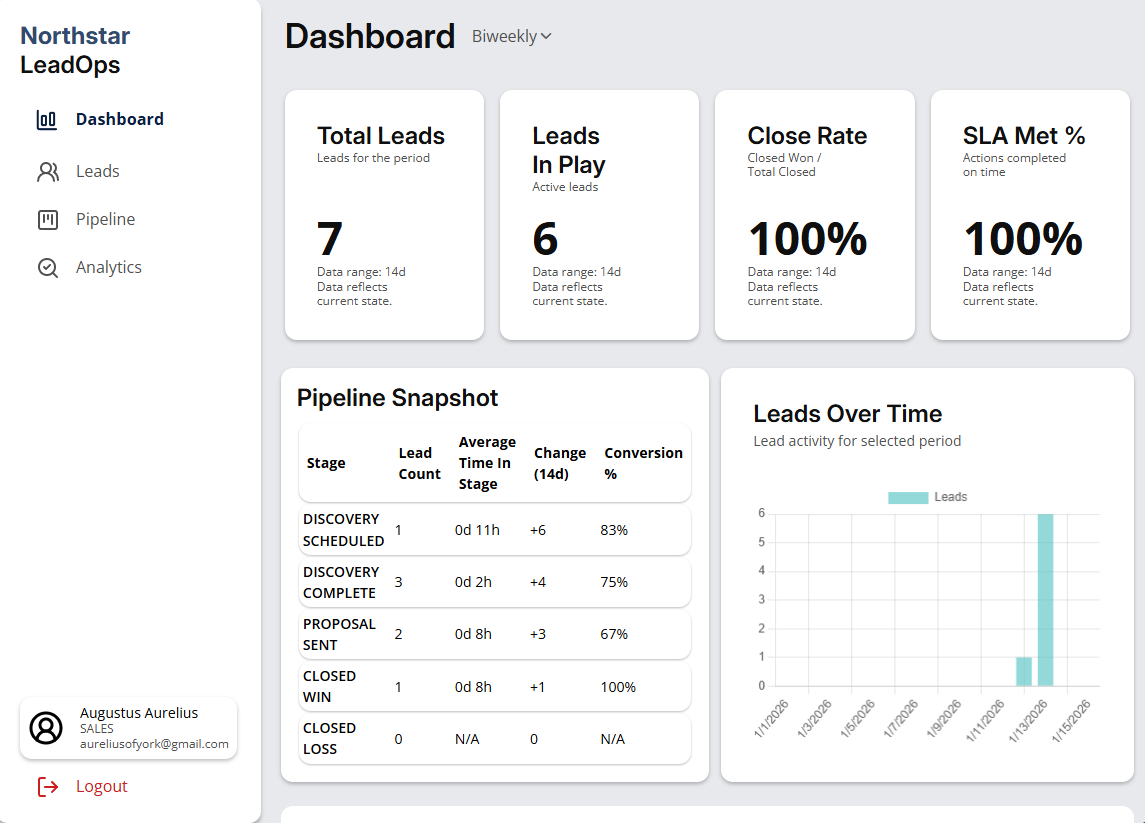
Where Lead Intent Becomes Managed Revenue Progression
Upstream systems capture and qualify intent, but value erodes when ownership and execution become unclear. Downstream outcomes depend on disciplined follow-through, accurate context, and timely actions. Most teams treat CRM screens as passive records, creating delays, blind spots, and inconsistent sales behavior. This module treats lead management as a live operational system that connects data, actions, and outcomes in sequence.
01
Home Page (Acquisition & Positioning)
Captures initial attention and positions the offer clearly, converting anonymous visitors into motivated inbound leads.
02
Form Funnel
Qualifies and routes leads through structured questions, surfacing intent early while filtering out low-fit inquiries.
03
Sales & Executive Dashboard
Centralizes deal activity and priorities, allowing for real-time visibility over the pipeline, and transforms activity into actionable insights.
04
CRM & Kanban
Structures lead records, deal stages, and activity history into a disciplined pipeline that ensures consistent follow-through and accountability.
Revenue Execution Breakdown
Disconnected CRM Execution Silently Erodes Qualified Revenue
When this module is weak, qualified demand loses momentum after intent is already established. Teams struggle to act decisively because context, ownership, and history are fragmented. The financial cost compounds through delayed follow-ups, mismanaged stages, and preventable deal loss.
01
Qualified Leads Lose Momentum
Sales actions are delayed because critical context is scattered across tools and messages. High-intent leads cool off while teams reconstruct history instead of advancing conversations.
02
Pipeline Visibility Becomes Unreliable
Stages are updated inconsistently without a shared operational view. Forecasts lose credibility, forcing leadership to rely on intuition rather than evidence.
03
Execution Relies on Memory Instead of Systems
Follow-ups depend on individual discipline rather than structured prompts. Revenue performance becomes volatile as outcomes vary by salesperson instead of process.
Operational Control Layer
A Centralized CRM Designed for Execution, Not Record Keeping
This module was built to stabilize revenue execution by unifying data, actions, and pipeline state. Decisions were made to reduce cognitive load during sales operations. Outcomes improve because execution occurs inside a controlled, context-rich environment.
Single Source of Truth Per Lead
All interactions, actions, and status changes are consolidated into one operational view. This enables faster decisions because no context reconstruction is required.
Pipeline Movement Tied to Real Activity
Stage progression reflects completed actions and communication history. This increases forecast accuracy by grounding pipeline status in observable behavior.
Action-Oriented Lead Detail Views
Lead records are structured around next steps rather than static fields. This shifts focus from documentation to momentum preservation.
Consistent Execution Across the Team
Systemized views and prompts reduce reliance on individual habits. Revenue outcomes become more predictable as execution quality standardizes.
Operational Execution Layer
CRM Interfaces Built to Preserve Momentum and Control Pipeline Outcomes
This walkthrough explains how execution risk is reduced across daily sales operations. Each screen was positioned to shorten response time and maintain lead context. Outcomes improve because action, prioritization, and visibility occur without switching systems.
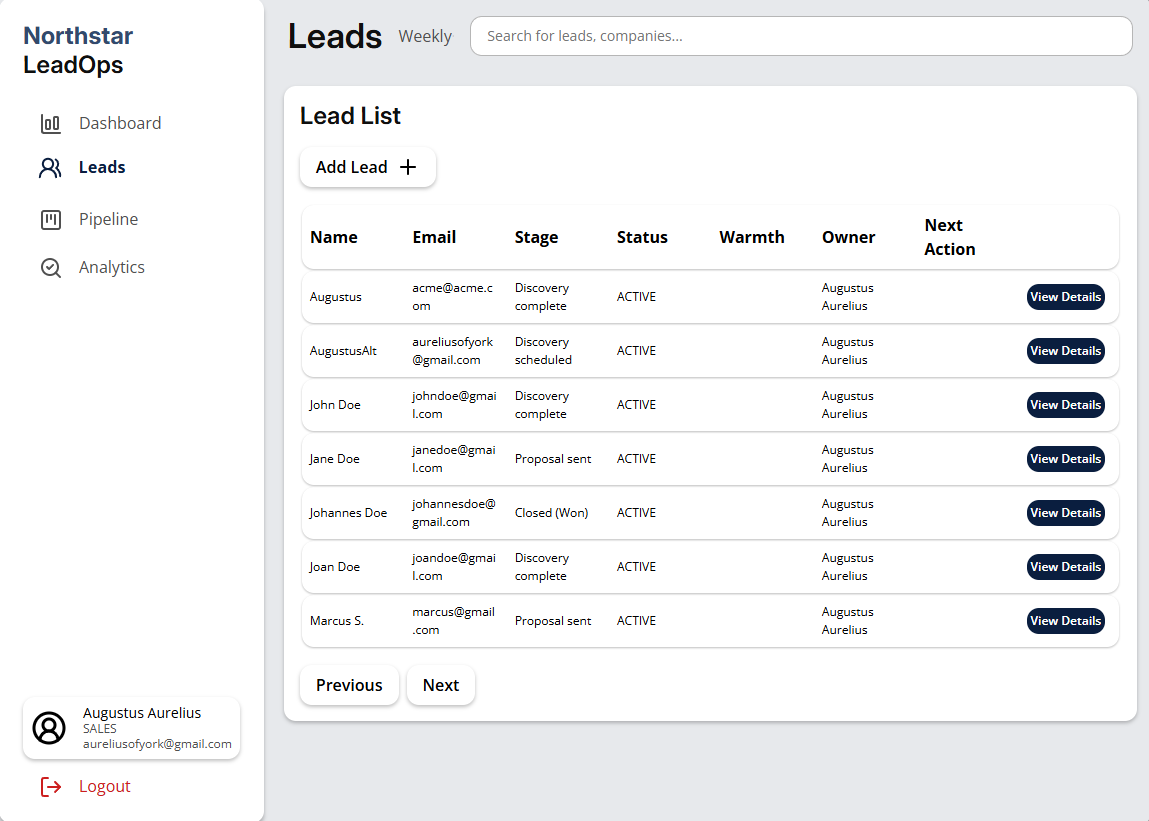
Lead Prioritization
Lead List Designed to Surface Revenue-Ready Actions
This view reduces missed opportunities by making active leads immediately visible. Pagination, search, and prioritization categories limit time spent locating viable opportunities. Revenue impact improves because attention is directed toward leads with actionable next steps.
Execution Context
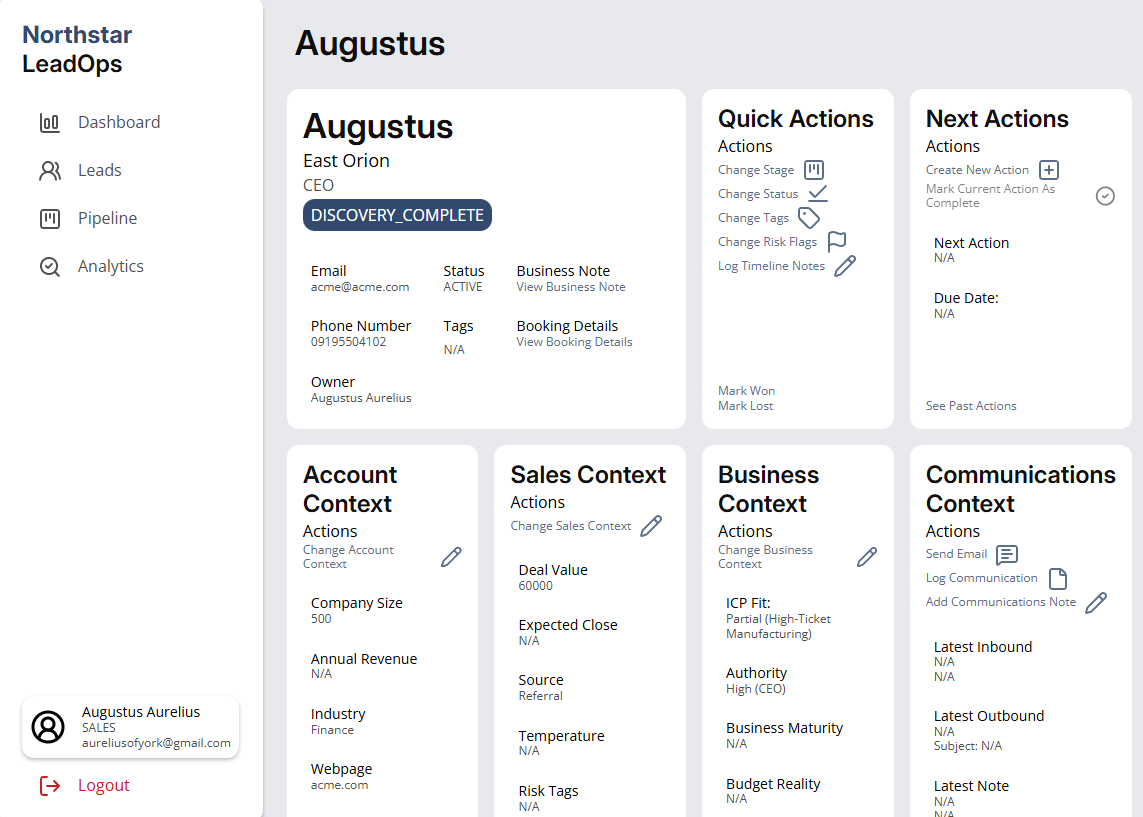
Lead Details That Convert Information Into Movement
This page prevents stalled deals by consolidating history, actions, and communication in one place. Decisions occur faster because context is continuously available. Execution improves because the interface encourages immediate next actions instead of passive review.
Pipeline Control
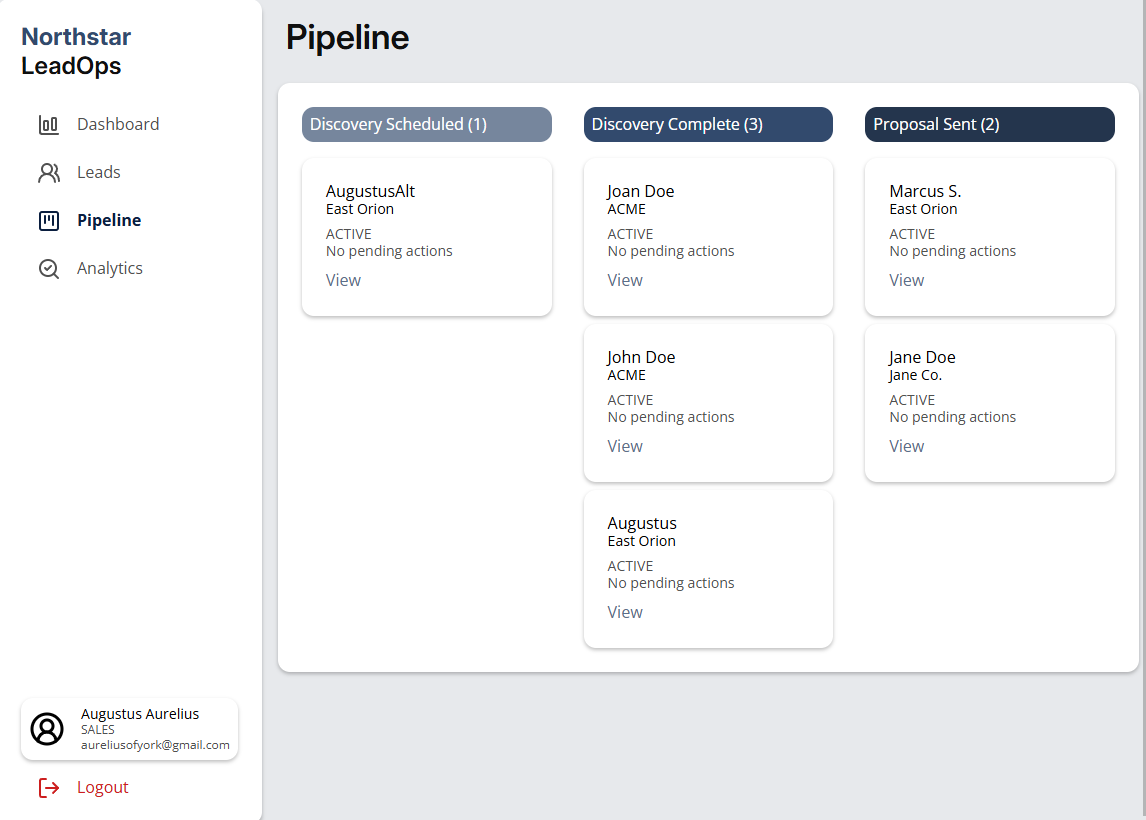
Kanban Pipeline That Aligns Visibility With Sales Action
This stage view stabilizes forecasting by tying pipeline position to observable progress. Individual cards allow for more targeted action by viewing the lead details page itself. Outcomes improve because stage movement reflects execution, not assumptions.
Measured Improvements Across Conversion, Sales, and Decision Quality
This module strengthens downstream performance after intent is captured. It improves outcomes by structuring how leads are evaluated, advanced, and acted upon. Business impact emerges because execution quality becomes visible and controllable.
-
Higher Conversion Quality
Lead progression improves because context and intent signals remain attached throughout the lifecycle. Disqualification occurs earlier due to clearer visibility into engagement and responsiveness. Conversion quality rises as effort concentrates on leads with validated momentum.
-
More Consistent Sales Execution
Sales quality stabilizes because actions and follow-ups are system-driven rather than memory-driven. Execution gaps surface quickly through unified timelines and pipeline states. Outcomes improve as sales behavior becomes repeatable instead of individual-dependent.
-
Improved Decision Quality
Leadership decisions improve because pipeline data reflects real activity, not optimistic reporting. Stage movement and deal status are grounded in observable actions. Strategic planning becomes more reliable as signal replaces assumption.
Assess How Your Sales Execution Breaks After Leads Are Captured
This module surfaces where revenue is lost due to fragmented execution and weak pipeline control. A discovery call identifies whether similar gaps exist in your current system. The conversation focuses on diagnosing execution risk, not selling software.